A home extension in London is rarely governed by one single rulebook. The same rear extension that sails through as Permitted Development in Wandsworth may require a full planning application two streets away in a Kensington and Chelsea conservation area. Before any design conversation happens, it is worth knowing which category your property falls into.
As a RIBA-certified design and build company led by a team of former planning officers, Sovran maintains a 95% planning success rate across London. What we know — and what most planning guides will not tell you — is that the borough a property sits in often matters more than the extension design itself. This guide walks through the planning permission landscape borough by borough.
Bottom line
Most single-storey rear extensions in London still qualify as Permitted Development, meaning no planning application is required before building begins. Conservation areas, Article 4 Directions and certain flat titles change this considerably — and the borough matters as much as the design.
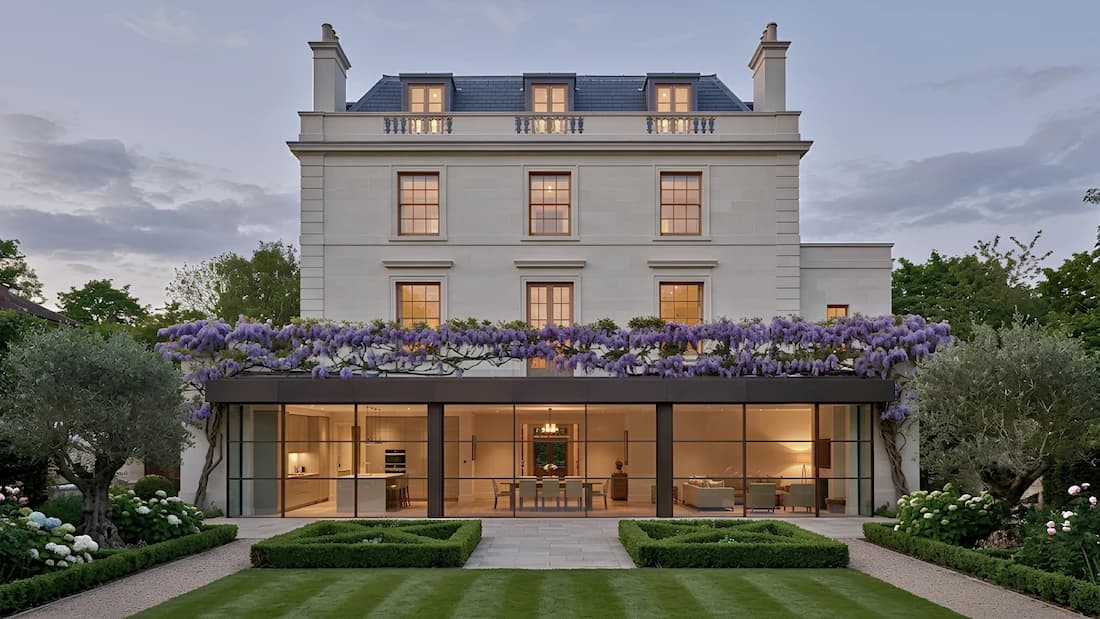
Permitted Development vs Full Planning: The Difference That Shapes Your Timeline
Permitted Development (PD) rights allow certain home extensions to proceed without a planning application, provided the project stays within fixed limits: typically 3 metres to the rear for a terraced or semi-detached house, and 4 metres for a detached property, under the current national rules. Full planning permission is required whenever a project exceeds these limits, sits within a conservation area, involves a listed building, or where a local authority has removed PD rights through an Article 4 Direction.
A Lawful Development Certificate, priced at £206, confirms PD status in writing; a full householder planning application currently carries a fee of £548. Neither route is inherently better; the right one depends entirely on the property and its location.
Conservation Areas in London: Which Postcodes Change the Rules
London has more conservation areas than any other UK city, and within them, PD rights are frequently restricted or removed altogether. Roof extensions, cladding changes and even some rear extensions can require full planning consent inside a conservation area, regardless of scale.
Royal Borough of Kensington and Chelsea (RBKC)
RBKC is one of the most heavily conserved boroughs in London, with the majority of its residential streets falling inside conservation area boundaries. Full planning applications are the norm rather than the exception here, and the council maintains detailed design guidance covering materials, window proportions and roof profiles that an application must satisfy.
Islington, Camden and Wandsworth
Islington and Camden both carry extensive conservation area coverage, particularly around Georgian and Victorian terraces, and Article 4 Directions are common in specific streets. Wandsworth is comparatively more permissive outside its conservation areas, and a higher proportion of home extensions there proceed under Permitted Development.
How Borough Location Changes Home Extension Planning Outcomes
Two identical rear extension designs, submitted in different boroughs, can produce two very different outcomes. Determination times, the level of neighbour consultation required and the local authority appetite for glazing, roof terraces and contemporary materials all vary by borough policy.
What Former Planning Officers Know Before an Application Is Submitted
Sovran's design team includes former planning officers who have sat on the other side of the process, assessing applications rather than submitting them. This means an application is shaped from the outset around what a specific borough is likely to approve — which materials a conservation officer will accept, where a roof terrace will draw objection, and how to pre-empt a neighbour consultation before it becomes a delay. This is the single largest driver behind Sovran's 95% planning success rate.
Application Timelines: The 8-Week and 13-Week Routes Explained
A standard householder planning application in London is determined within 8 weeks. Applications classed as major, or those requiring an Environmental Impact Assessment, an increasingly common occurrence for larger basement and multi-storey home extension projects, move to a 13-week timeline. Choosing the correct route from the outset protects the overall project programme.
Why Sovran's Design and Build Model Supports a 95% Planning Success Rate
Because Sovran delivers architecture, planning strategy and construction under one team, a home extension design is never finalised in isolation from what a borough will actually approve. The same team that submits the planning application also builds the project, which removes the disconnect that occurs when a separate architect hands a scheme to a builder without planning accountability.
| Borough | Conservation Coverage | Typical Route | Average Determination |
|---|---|---|---|
| Kensington and Chelsea | Extensive | Full planning in most cases | 10–13 weeks |
| Islington | High | Full planning common | 8–13 weeks |
| Camden (incl. Hampstead) | Very high | Full planning almost always | 10–13 weeks |
| Wandsworth | Moderate | PD common outside CA | 8 weeks |
| Hammersmith and Fulham | Moderate | PD often available | 8 weeks |
| Richmond upon Thames | High | Full planning common near heritage zones | 8–13 weeks |
Unsure whether your home extension needs full planning permission?
Book a free consultation with a Sovran specialist. Our team includes former planning officers who assess a property's planning position before any design work begins, so you know the real timeline from day one.
Sovran Group is a RIBA-certified design and build company delivering home extensions and loft conversions across London since 2011. Our architectural team includes former planning officers — which is why we achieve a 95% planning success rate on planning applications across all London boroughs.